

What Is The Best Way To Clean Greasae From Microwave And Stove?
Who Invented the Microwave Oven?
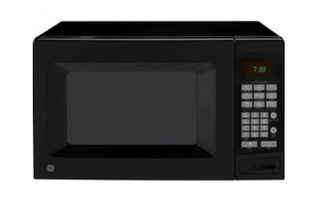
A microwave oven is a kitchen appliance that is in nearly every U.S. domicile — 90 percent of households have one, co-ordinate to the U.S. Bureau of Labor Statistics. With the touch of a couple of buttons, this ubiquitous device can boil h2o, reheat leftovers, pop popcorn or defrost frozen meats in mere minutes.
The microwave oven was invented at the finish of World War 2. Yet it took awhile for them to catch on. At first they were too big and expensive, and people didn't trust them because of the radiations they utilise. Eventually, technology improved and fears faded. Past the 2000s, Americans named the microwave oven as the No. 1 engineering science that made their lives easier, co-ordinate to J. Carlton Gallawa, writer of the Complete Microwave Oven Service Handbook.
And it was all due to a happy accident with some melted chocolate.
Adventitious invention
Percy LeBaron Spencer was a self-taught engineer who had never finished grammar school, according to the Southwest Museum of Engineering, Advice and Computation. While at the Raytheon Corp., he worked on magnetrons — vacuum tubes that produce microwave radiation and are used in radar systems. In 1941, he devised a more efficient way to manufacture them. His innovation allowed production to rise from 17 per day to over 2,600 per twenty-four hours.
Spencer was testing a magnetron when he noticed that the chocolate bar in his pocket had melted, according to Raytheon'due south company history. Intrigued, Spencer tested other foods, including popcorn kernels, and noticed that they all popped. He put an egg nearly the magnetron and watched equally it started to shake and then explode. Spencer realized that the foods had been exposed to low-density microwave free energy, co-ordinate to Gallawa. He next built a metallic box and fed microwave power into information technology. The energy entered the box but could not escape — microwaves do not pass through metal. Spencer discovered that microwaves could cook food faster than convention ovens that used oestrus. He filed a patent application in 1945. (Spencer went on to receive 150 patents throughout his career, co-ordinate to the National Inventors Hall of Fame. He died in 1970.)
The showtime commercial microwave oven was tested in a Boston eating place in 1947. Later that year, Raytheon introduced the Radarange 1161. It stood 5.five feet (1.seven meters) tall, weighed 750 lbs. (340 kilograms) and cost $5,000, according to Gallawa. It had to be hooked upwardly to a water line because the magnetron was h2o-cooled. Information technology took a few years for the public to overcome their initial reluctance only every bit technology improved, microwave ovens grew in popularity, especially in the nutrient manufacture. Restaurants could keep cooked recipes in the refrigerator and heat them to order reducing waste. Other food industry establishments used microwaves for roasting coffee beans and peanuts, defrosting and precooking meat, and fifty-fifty shucking oysters.
Other industries also found uses for microwave heating. Microwave ovens are too used to dry cork, ceramics, paper, leather, tobacco, textiles, pencils, flowers, wet books and match heads, according to Gallawa.
Tappan, an apparatus maker, introduced the first microwave ovens for abode use in 1955, but considering of their large size — as big equally a stove — and high cost — $i,295 — few were sold, according to Gallawa. Raytheon acquired Amana Refrigeration in 1965, and two years later, the Amana Radarange, which could fit on a kitchen countertop, was introduced. Information technology price just under $500.
Before long subsequently, microwave ovens became more popular than even the dishwasher due to decreasing sizes and costs. In 1975, only 4 percent of U.S. homes had a microwave oven, according to Gallawa; in 1976, the number jumped to 14 per centum. Today, approximately 90 percent of households in the United States take a microwave oven, according to the Bureau of Labor Statistics.
How does a microwave work?
Microwave ovens use radio waves set at a specific frequency — 2,450 megahertz with a ability ranging from 500 to 1,100 watts, co-ordinate to the Globe Health Organization (WHO). Nutrient that sits in a microwave oven is bombarded on all sides by the microwaves. Water molecules within the food absorb the microwaves, and the resulting vibrations generate rut and cook the food. Microwaves pass through plastic, drinking glass and ceramic but non metals, which is why information technology is not recommended to apply metal containers or utensils in a microwave oven, co-ordinate to SciTech.
A magnetron generates the microwaves. According to EngineerGuy, a magnetron is two permanent magnets on either side of a vacuum tube. Microwave radiation is created by the flow of electrons building up magnetic and electric fields, according to Tech-Faq. The microwaves are directed to the oven chamber in order to estrus and cook the food.
Microwave safety
Since their initial evolution, microwave ovens take gotten a bad rap due to their use of microwave radiation. According to the World Wellness Organization (WHO), microwave ovens are safe when they are used properly and maintained in skilful condition. While massive amounts of microwave radiation can be harmful, ovens are designed to continue the radiation within the oven and present simply when the oven is switched on and the door is close. A minimal amount of radiation that may leak, primarily through the glass door, is well beneath international standards.
According to the WHO, several countries and international standards committees have set a product emission limit of l watts per foursquare meter at whatever indicate 5 centimeters abroad from the external surfaces of the oven. In practice, microwave emissions are substantially below this limit. Also, exposure decreases quickly with altitude: a person 50 cm from the oven receives nearly one ane-hundredth of the microwave exposure of a person five cm away.
The main health business concern when it comes to using microwaves is that in general, microwaves heat unevenly and can crusade parts of the food to either be undercooked or extremely hot, so caution is needed — likewise every bit a few extra minutes — for the rut to equalize within the nutrient. The master injury that results from using a microwave oven is a fire resulting from hot food and liquids or the particles of hot food from explosions from foods, such as eggs in their shells, cooking unevenly.
Nutritional value
There are also concerns about the nutritional value of foods after they have been cooked in a microwave oven. According to the WHO, these concerns are based on misconceptions. At that place is little to no difference in nutritional value of foods cooked in microwave oven versus a conventional oven, nor does cooking nutrient in a microwave oven make the food radioactive.
A 1982 article published in Critical Reviews in Nutrient Science and Nutrition reviewed data from several studies on the effects of microwave cooking on the nutritive values of moisture, protein, saccharide, lipid, minerals and vitamins. The authors concluded that no significant nutritional differences be between foods prepared by conventional and microwave methods.
In 2010, a team of researchers from the Universidad Complutense Madrid in Spain cooked a variety of veggies, from artichokes to zucchini, with techniques ranging from boiling to frying to microwaving. They measured the corporeality of antioxidants present before and afterward cooking. They found that baking, griddle-cooking and microwaving produced the everyman losses, while boiling and pressure-cooking were the hardest on antioxidants. Frying was somewhere in between.
The hereafter of microwave ovens
Many microwave ovens today comprise sensors that stop themselves when the food has completed cooking, according to SciTech. Samsung has developed a microwave oven that offers a variety of cooking methods. In addition to defrosting meats and reheating leftovers, the oven can fry and bake. It also has a fermentation bike that can be used in making fresh dough and yogurt.
A microwave oven from NXP Semiconductors uses solid-state RF (radiofrequency) energy to cook. The microwave oven controls where, when and the corporeality of energy that is transmitted directly into the food. The event is improved consistency, taste and nutrition, according to NXP. The solid-state device allows for controlling large amounts of free energy with high efficiency and with real-time feedback.
Other companies such equally Wayv are producing portable, solid-state RF microwave ovens that can be charged via a regular plug, in the car, or with solar chargers. This particular model, which resembles a thermos, can be used for approximately xxx minutes per charge to heat up to 17 fluid ounces (0.v liters) at a time.
Microwave ovens are also gaining features to be able to connect to mobile technologies, such as the line of LG smart appliances. These appliances take the ability to be turned on remotely from anywhere via a smartphone or other device.
Additional resource
- Food and Wine: This New Microwave Could Finally Replace Current 50-Yr-Old Technology
- Journal of Microwave Power: The Bear on of Microwaves on the Future of the Nutrient Industry: Domestic and Commercial Microwave Ovens
- National Museum of American History: Tappan Model RL-1 Microwave Oven

Since high school, Rachel Ross has been looking up toward the stars to understand how the universe works. She has an undergraduate degree from the Academy of California Davis and a main's degree in astronomy from James Cook Academy. Rachel has spent several years making her passion for astronomy and science education into a profession. She has even held the position of Jedi master at an observatory. And no matter what anybody says, the concluding answer is ever 42 and duct tape is useful in all situations.

Source: https://www.livescience.com/57405-who-invented-microwave-oven.html
Posted by: ruizthatimbers.blogspot.com
0 Response to "What Is The Best Way To Clean Greasae From Microwave And Stove?"
Post a Comment